Where history
became personal
The Tower, the Thames, and the lives behind the faces.
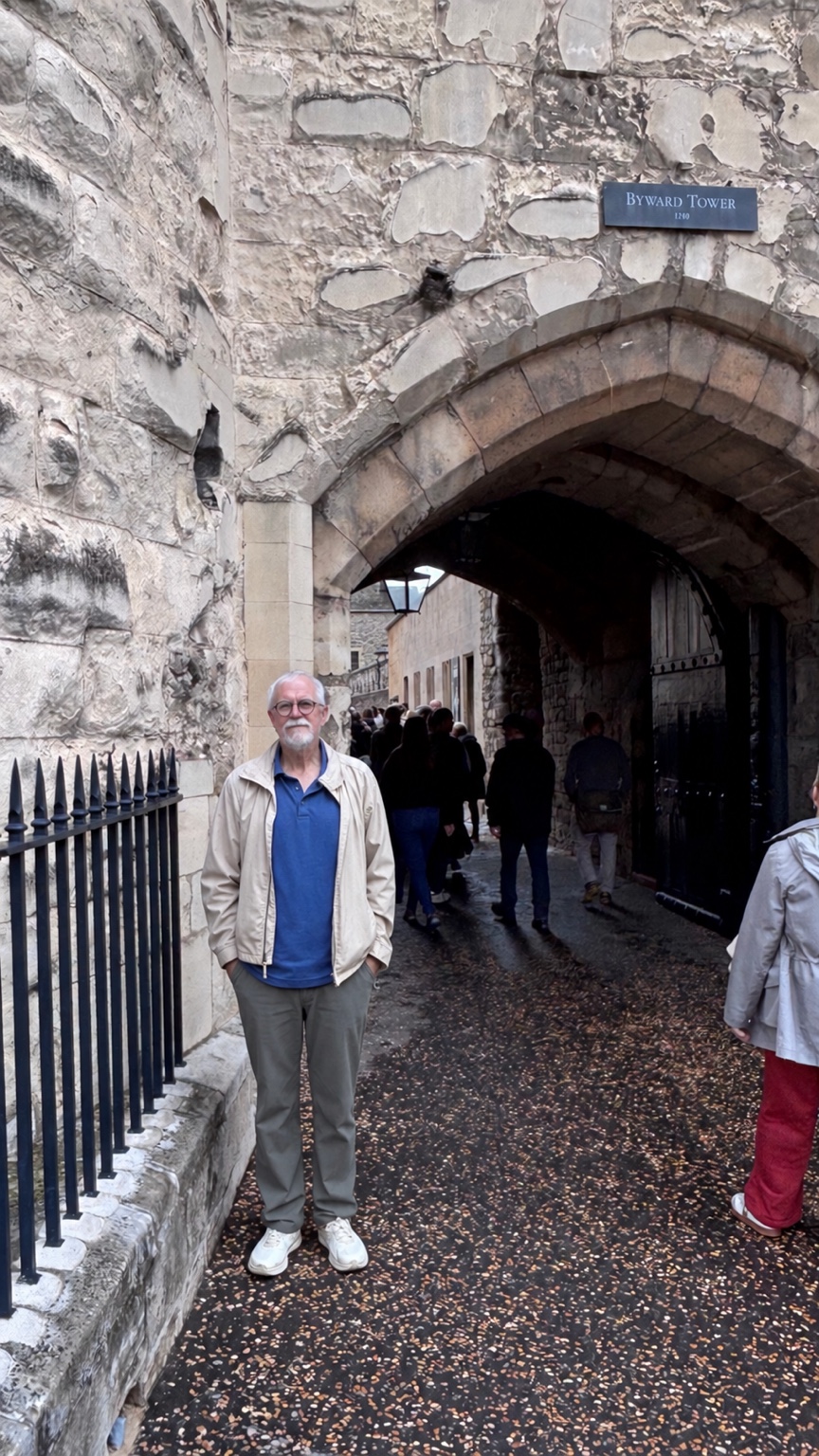
At the Tower of London, the stone seemed to gather every sound and hold it. Standing beneath the arch at Byward Tower, I could feel my painter’s mind begin its familiar transformation: a doorway becoming a stage, a passing figure becoming a character, a shadow becoming the beginning of a story.
The Crown Jewels offered spectacle. What stayed with me just as strongly was the human scale of the place—the sense of people moving through these spaces, carrying their own hopes, fears, ambitions, and absurdities. My imagination kept wandering toward the overlooked lives at the edge of the grand narrative.
The National Portrait Gallery gave those lives faces. Looking closely at portraits, I found myself studying more than likeness: a brow held in tension, the weight of a mouth, the way clothing announces a person before the eyes tell a different story. I want to bring that complexity into my own characters, even at their most whimsical.
The Churchill War Rooms brought another kind of intensity. Their enclosed spaces made me think about how a painting can hold pressure and purpose without a grand gesture. At the Victoria and Albert Museum, my eye opened again to the expressive possibilities of objects, dress, ornament, and the spaces around them.
A face can become a biography. A doorway can become an invitation into another life.
Then there was All Hallows by the Tower and my exploration of the Moore family’s connection to the river. Thinking about Henry Blaine Moore, Thomas Burbidge Moore, and Frederick Moore gave the Thames a personal gravity. The river became a place where family memory and imagination could meet.
I began picturing working lives beside the water: weathered hands, practical coats, the patient strength of people whose daily labor rarely becomes a celebrated portrait. These ideas will find their way into future paintings—not as a claim that I can recover every detail, but as an attempt to give remembered lives a visible presence.